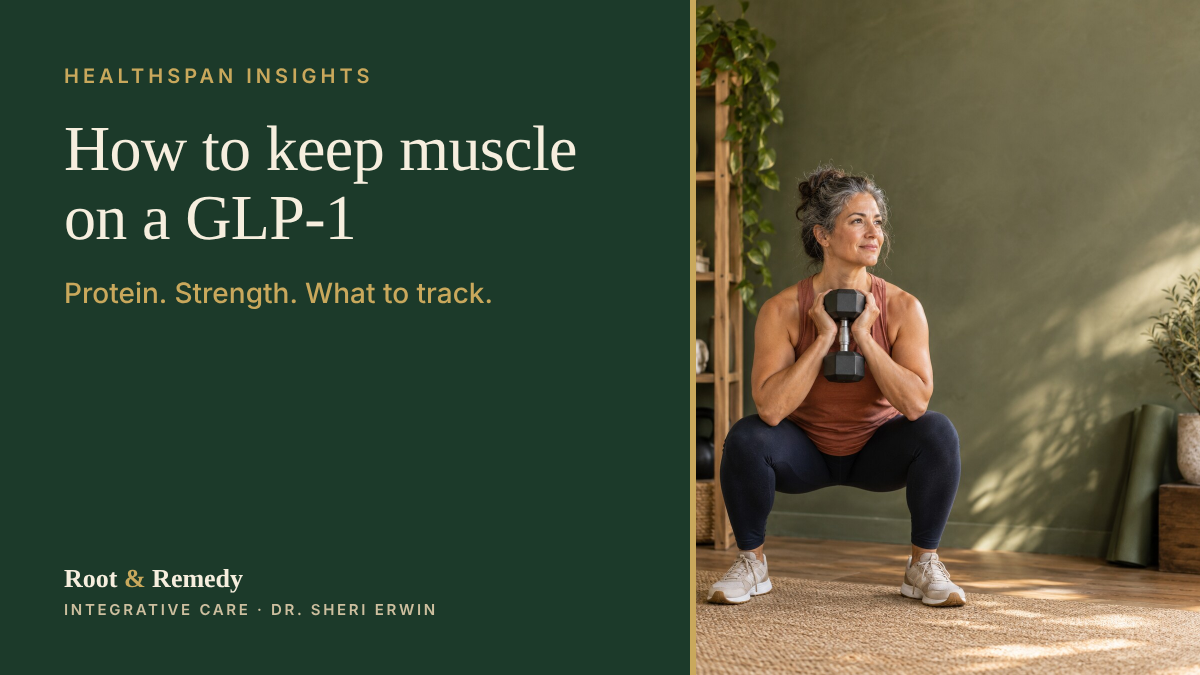
The most reliable way to protect muscle while taking a GLP-1 medication is to eat enough protein at every meal, do resistance training two or three times a week, and track strength alongside the scale. Weight loss from any method includes some lean mass, and GLP-1 medications reduce appetite enough that protein often falls short unless there is a plan.
The large semaglutide and tirzepatide trials included body-composition substudies that used DXA scans to split weight lost into fat and lean mass. Lean mass made up a meaningful share of the loss, commonly reported somewhere between about a quarter and nearly 40 percent depending on the trial and the method.
Two details help put that number in context. Lean mass on a DXA scan includes water, organ tissue, and connective tissue as well as skeletal muscle, so it overstates muscle loss. And a similar pattern appears with diet-driven weight loss and after bariatric surgery. The share of lean loss responds to what you do, which is why the habits below matter. For a wider look at what these medications can and cannot do, see my article on GLP-1 medications and perimenopause.
When appetite drops, protein is usually the first thing to slip. A practical target is 25 to 30 grams at each meal. Many clinicians also use a daily range of about 1.2 to 1.6 grams per kilogram of body weight for people who are losing weight and training. A woman who weighs 70 kilograms (about 154 pounds) would land near 85 to 110 grams per day. If you have kidney disease or any condition that affects protein handling, check your target with your prescriber first.
Foods that deliver protein in small volume matter most when you feel full quickly. Approximate amounts:
When you can only manage a few bites, eat the protein first and the rest second. The protein cheat sheet inside the Metabolic Defense Kickstart lists more options by grams. My article on protein-forward breakfasts covers the meal that most women find hardest to get right.
Protein supplies the building material, and training tells the body to use it on muscle. Two to three sessions a week that work the major muscle groups (legs, hips, back, chest, shoulders) are a solid starting point. Choose a load where the last two or three repetitions feel difficult, and add weight or repetitions gradually over the weeks. Dumbbells, resistance bands, and bodyweight moves like squats to a chair and incline push-ups all work.
If you are new to lifting, start lighter than you think you need to and focus on form. Ro, who leads the follow-along workouts inside the Metabolic Defense Project, builds sessions for exactly this situation.
The scale cannot tell you whether the pounds coming off are fat or muscle. Two simple checks can fill in part of the picture, and both can be repeated monthly:
These are screening numbers, not a diagnosis. A slow chair test or a falling grip score is a reason to bring protein and training up and to mention it to your clinician. Gait speed, stair climbing, and how heavy a grocery bag feels are useful everyday checks as well.
Sleep, stress, and total intake all play a part. Slow weight loss gives you a better chance of keeping muscle than fast loss does, and nausea or constipation that keeps you from eating enough is a reason to call your prescriber. Never adjust a dose on your own to fix a side effect.
If you want a low-pressure way to begin, the free Metabolic Defense Kickstart walks through protein, muscle, glucose, and sleep over five days. The Metabolic Defense Project adds follow-along workouts, a resource library, and a live monthly group coaching session, and it is open in all 50 states. In the states where I practice, you can also book a visit to talk through your own situation (see Locations).
Many clinicians aim for roughly 25 to 30 grams of protein per meal, and about 1.2 to 1.6 grams per kilogram of body weight per day for people who are losing weight and strength training. Kidney disease and other conditions change that range, so confirm your target with your prescriber.
Some of the weight lost on any GLP-1 medication is lean mass, which includes muscle but also water and organ tissue. The share is not fixed. Adequate protein and resistance training are the two habits most associated with keeping more of it.
Resistance training is the most direct signal your body gets to keep muscle while losing weight. Two to three sessions per week using weights, bands, or bodyweight, with a final few repetitions that feel hard, is a reasonable starting target.
This article is general education for women, not medical advice. It does not diagnose any condition or recommend a specific treatment for you. Talk with your own healthcare provider about your symptoms, labs, and medications before making changes. Sources: Wilding JPH et al. Once-weekly semaglutide in adults with overweight or obesity (STEP 1). N Engl J Med. 2021. Body-composition substudy of SURMOUNT-1 (tirzepatide), Diabetes Obes Metab. 2025;27:2720. Cruz-Jentoft AJ et al. Sarcopenia: revised European consensus (EWGSOP2). Age Ageing. 2019.
Take the free Metabolic Snapshot quiz, or book a free consultation to talk it through.
Take the free quiz